
Water in the house? One call, day or night.
Water damage restoration in Marietta, GA
Burst pipe, wet crawl space, or sewer backup? Call and we connect you with an independent IICRC-certified restoration company that serves your part of Marietta. They inspect the damage, set up drying, and document it for your insurer.
What's wet right now?
Tap one to start the estimator. About a minute, no sign-up.
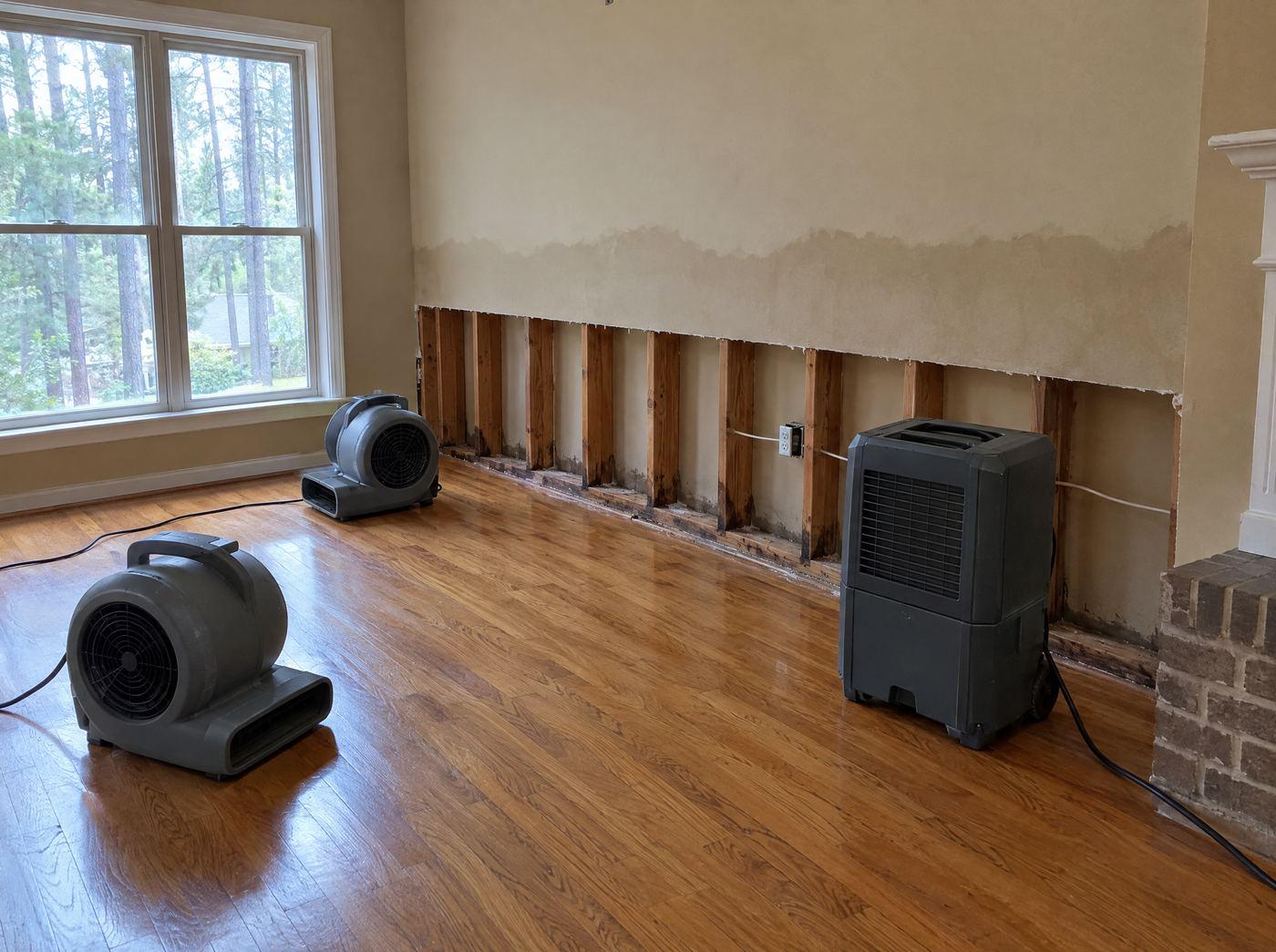
Illustrative photo.
- Line answered 24/7Nights, weekends, and holidays
- IICRC-certified companiesTrained to the IICRC S500 drying standard
- Paperwork for your claimPhotos, moisture logs, itemized estimate
- ZIPs 30008–30068Homes across Marietta


We work with your insurance company
Partner companies work with the major homeowners insurers in Georgia, including:
- State Farm
- Allstate
- USAA
- Travelers
- Auto-Owners
- Farmers
- American Family
- Liberty Mutual
- Georgia Farm Bureau
- Progressive
Insurers are named for reference only. We are not affiliated with or endorsed by any insurance company.
Who do I call: the water company or a restoration company?
It depends on which side of the meter the water is on. Not sure which utility serves you? Check who sends your water bill.
Leak at the street or meter, inside Marietta city limits
Marietta Power & Water
770-794-5230Water emergency line listed by the city.
Marietta Power & Water websiteLeak at the street or meter, elsewhere in Cobb County, including most of East Cobb
Cobb County Water System
770-419-6201County emergency dispatch, for broken water lines and sewer backups.
Cobb County Water System websiteWater inside your house
Leaks on your side of the meter, a failed water heater, a sewer backup in the house, or a wet crawl space are yours to dry out. Shut off the main, then call us.
(470) 305-6747
Water damage estimator
Know what your cleanup needs before anyone walks in the door.
Four questions, about a minute. No sign-up, no phone number. It's an estimate, not a quote.
- Equipment counts
- Water category and class
- Typical drying time
- Insurance outlook
Where is the water coming from?
Pick the closest match. The source sets the water category.
Your drying scope estimate
Marietta
- Water category
- ...
- Evaporation class
- ...
- Extraction
- ...
- LGR dehumidifiers
- ...
- Air movers
- ...
- Antimicrobial
- ...
- Typical drying time
- ...
- Moisture mapping & claim photos
- Done on site
Answer four quick questions to build your scope. In a hurry? Call (470) 305-6747
Water damage restoration services in Marietta
From emergency water removal to mold remediation. Partner companies follow the IICRC S500 standard, the same benchmark your adjuster uses to review the bill.
Burst & frozen pipes
Split supply lines in walls, attics, and crawl spaces. Extraction, drying, and only the tear-out that's needed.Category 1 when caught earlyDetailsCrawl space & basement water
Standing water under the house or in a basement. Pump-out, drying the joists and subfloor, and moisture checks.Usually Category 2DetailsFlood & storm water
Creek overflow and storm runoff. Mud removal, disinfection, flood cuts, and full drying.Category 3DetailsWater heater & appliance leaks
Water heaters, washer hoses, dishwashers, and fridge lines. Fast drying keeps cabinets and floors savable.Category 1 to 2DetailsSewage backups
Toilet overflows, floor drains, and main-line backups. Containment, removal, and disinfection.Category 3DetailsWater removal & drying
Water extraction and structural drying, with daily moisture readings until everything is back to normal.Every water jobDetailsMold remediation
Containment, removal, and drying that fixes the moisture behind it, so the mold doesn't come back.Water left 24+ hoursDetails
What happens when you call
Whether it's Braves night at Truist Park or 3 a.m. on a Tuesday, the line is open 24/7.
- 1
You call (470) 305-6747
Say where the water is coming from and your ZIP code. Your call goes to an independent restoration company that serves your part of Marietta.
- 2
They inspect and measure
The company traces how far the water spread with moisture meters and gives you a written estimate before work starts.
- 3
Drying starts when you say go
Extraction and drying equipment go in once you approve. Photos and moisture logs are kept for your adjuster.
What to do in the first 15 minutes after water damage
These protect your house, your safety, and your claim. Tap each one as you go.
Why Marietta homes take on water
Creek flooding, tropical rain, humid crawl spaces, and the odd hard freeze.
Sept. 2009
Creeks that rise in hours
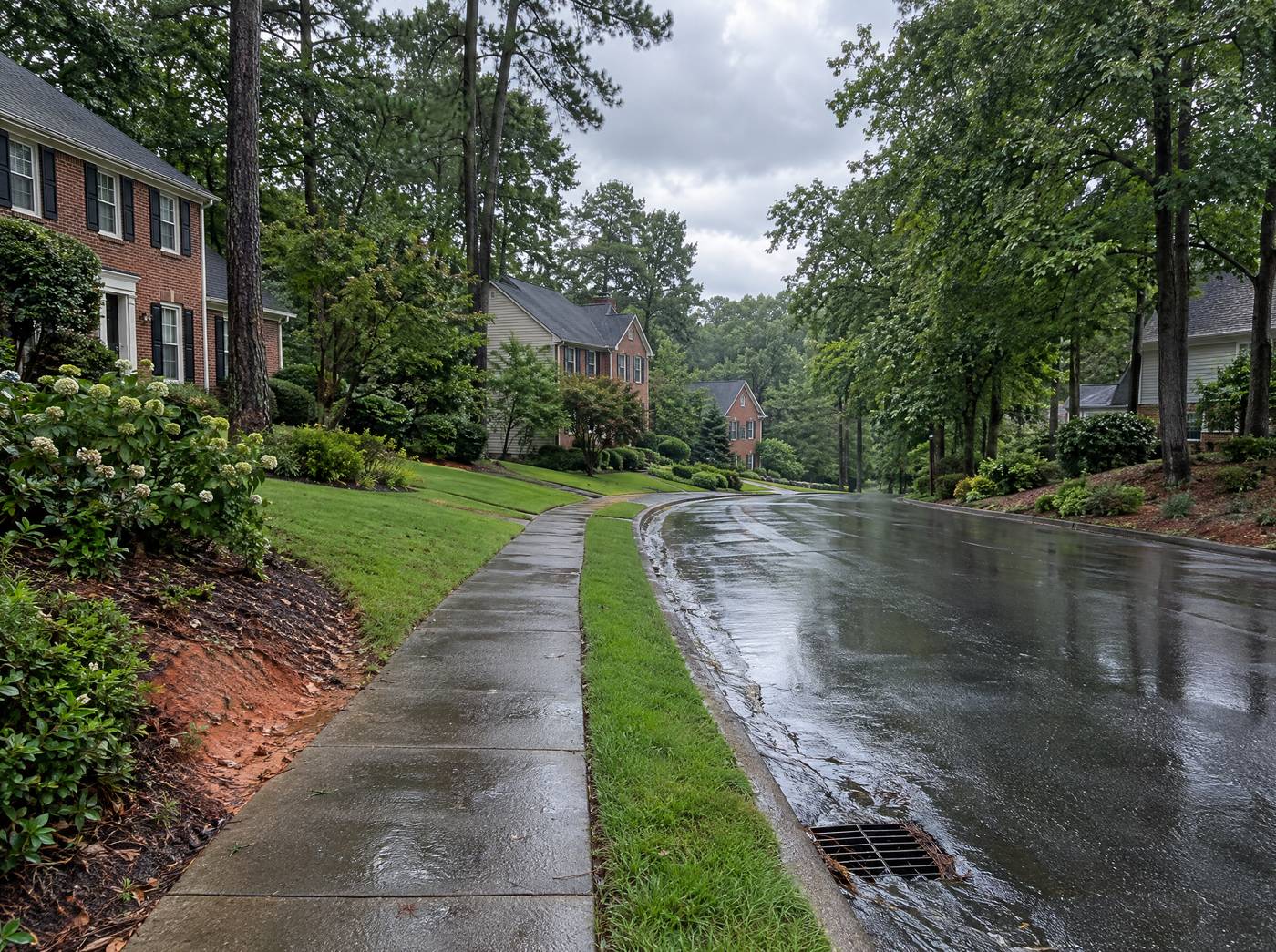
On September 21, 2009, Sope Creek at Marietta crested at 18.35 feet, more than six feet above its 12-foot flood stage, and Sewell Mill Creek went over flood stage the same day. Overland flooding like this is excluded from a standard homeowners policy.
Source: National Weather Service, Epic Floods of 2009Sept. 2024
Tropical rain from storms that land far away
A storm that makes landfall on the Gulf Coast can still bring heavy rain to Cobb County. During Helene in September 2024, Atlanta logged 4.32 inches of rain on September 26, breaking a daily record set in 1962. Gutters, window wells, and low crawl space vents can't move that much water.
Source: National Weather Service, September 2024 climate summaryEvery summer
Crawl spaces that stay damp
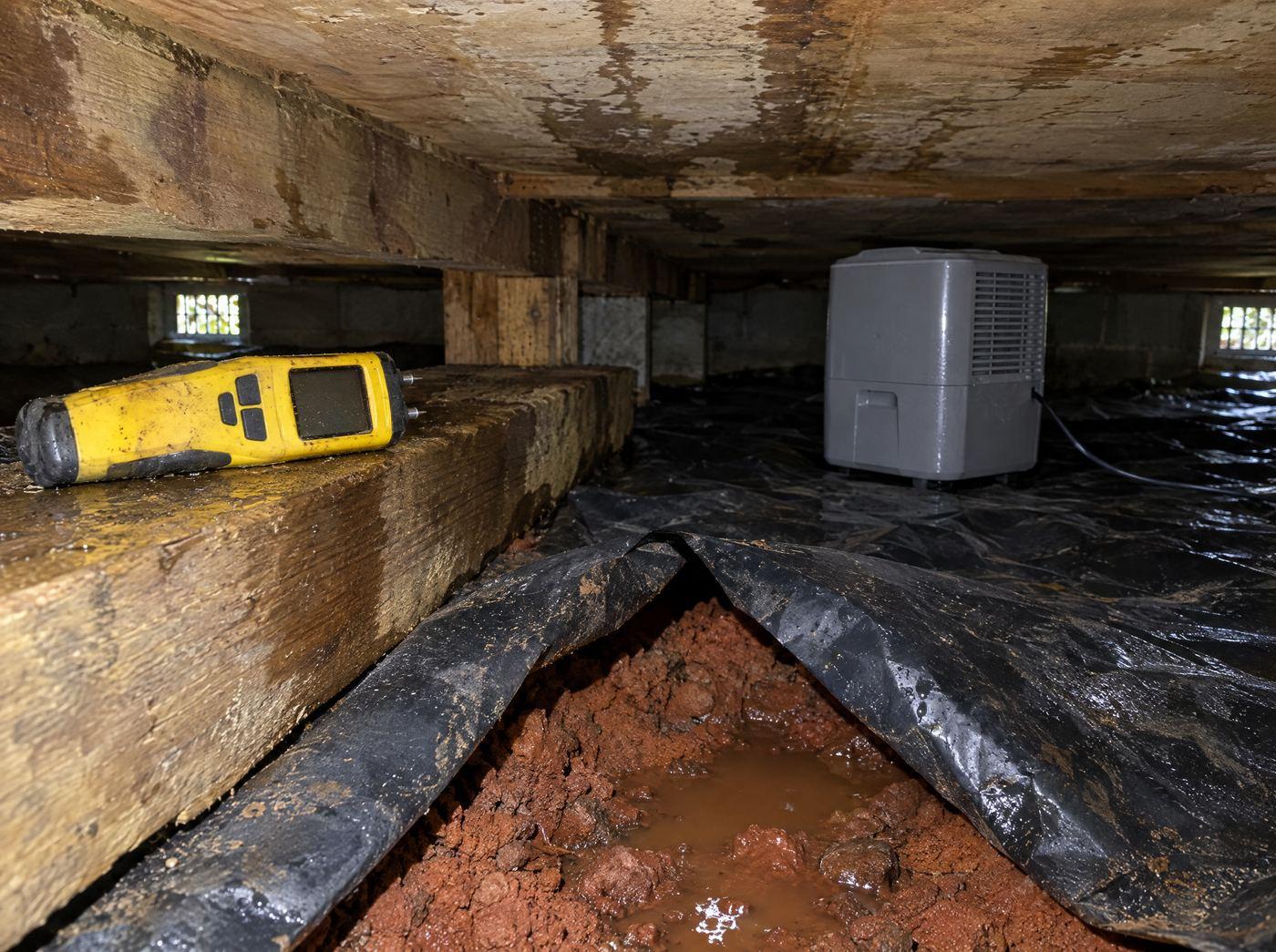
Georgia summers are humid, and a leak under the floor can go unnoticed for weeks. UGA Extension advises keeping indoor humidity below 60 percent, ideally 30 to 50, and putting a vapor barrier over crawl space soil. Framing and insulation that stay wet down there can grow mold before anyone smells it.
Source: UGA Extension, Preventing Mold in Your HomeHard freezes
Pipes in the cold spots of the house
When a hard freeze does come, the pipes at risk are the ones in crawl spaces, garages, and exterior walls. Cobb County Water tells residents to insulate those pipes, open sink cabinets, drip faucets, and learn where the main shutoff is before the cold arrives.
Source: Cobb County Water System, Winter Weather Water Guide
Does homeowners insurance cover water damage in Georgia?
It depends on where the water came from more than how bad it looks. Pick your situation to see what a standard HO-3 policy typically pays, and what to watch for.
Sudden and accidental water from plumbing, heating, or a household appliance is the core water peril in a standard HO-3 policy. After your deductible (the amount on your policy's declarations page), drying and resulting repairs are typically paid.
Typically paid
- Water extraction, structural drying, and dehumidification
- Tearing out drywall or flooring needed to dry the house or reach the leak
- Rebuilding damaged finishes, plus contents up to your limits
- Hotel or rental costs if the home can't be lived in
Watch for
- The broken pipe or failed appliance itself is usually not covered
- Slow leaks that went on for weeks are excluded
- Freeze damage can be denied if the home was unheated and the water wasn't shut off
General information, not insurance advice. Questions about a claim decision? The Georgia Office of Insurance and Safety Fire Commissioner helps consumers with complaints and questions.
Heading to Truist Park tonight? Do this before you leave.
A lot of water damage gets found the same way: you come home late from a Braves game and hear water running. Five minutes before you leave makes that less likely, and tells you what to do if it happens anyway.
Save (470) 305-6747- 1
Find the main shutoff
Cobb County Water suggests finding and labeling your whole-house shutoff valve and practicing how to close it. Do it now, not with water on the floor.
- 2
Look at the washer hoses
Rubber hoses that bulge, crack, or weep at the fittings can split under pressure. Swap them before one lets go while nobody is home.
- 3
Leave the heat on in a cold snap
On a freezing night, keep the thermostat set, open the sink cabinets on outside walls, and let those faucets drip until you're back.
- 4
Save our number in your phone
If you walk in to a leak, shut off the main and call. We connect you with an independent restoration company that serves your part of Marietta.
Marietta neighborhoods and ZIP codes we serve
Every part of town, from the Square out to East Cobb, Sandy Plains, and Austell Road. Housing changes a lot across Marietta, and so do the problems.
Around the Square
- 30060
Main roads: Church St, Lawrence St, and South Cobb Dr
Whitlock Avenue and Dallas Highway
- 30064
Main roads: Whitlock Ave, Burnt Hickory Rd, Dallas Hwy, and Powder Springs St
Sandy Plains and Canton Road
- 30066
Main roads: Sandy Plains Rd, Canton Rd, and Shallowford Rd
East Cobb
- 30062
- 30068
Main roads: Roswell Rd, Johnson Ferry Rd, Barnes Mill Rd, Old Canton Rd, and Lower Roswell Rd
Powers Ferry and Terrell Mill
- 30067
Main roads: Powers Ferry Rd and Terrell Mill Rd
Austell Road and Sandtown
- 30008
Main roads: Austell Rd and Sandtown Rd
30006, 30007, 30061, 30065 · PO box ZIP codes. USPS uses these for post office boxes only. Give the ZIP for your street address when you call
30063, 30069 · Single-organization ZIP codes. USPS assigns these to one company or organization, not to neighborhoods
Water damage questions from Marietta homeowners
Still unsure? Run the estimator or give us a call.
Who do I call about a leak at the street or the meter in Marietta?
It depends on who sends your water bill. Inside Marietta city limits, water comes from Marietta Power & Water, whose water emergency number is 770-794-5230. Many homes with a Marietta mailing address, including most of East Cobb, are outside city limits and get water from the Cobb County Water System, whose emergency dispatch line is 770-419-6201 for broken water lines and sewer backups. Leaks on your side of the meter, and water inside the house, are yours to fix, and that is where a restoration company comes in.
Does homeowners insurance cover flood damage in Georgia?
Not a standard policy. The Georgia Insurance Commissioner's office says a standard homeowners policy covers wind and tornado damage but not flooding, which needs a separate National Flood Insurance Program policy. Water that starts inside the house, like a burst supply line or a failed water heater, is a different story and is usually covered after your deductible. Sewer and drain backups need a water backup endorsement.
Will the restoration company negotiate my insurance claim?
No. In Georgia, anyone who negotiates a claim on your behalf has to be a licensed public adjuster. A restoration company can document the loss with photos, moisture readings, and an itemized estimate, and send that to your adjuster, which is often what gets a claim paid without a fight. You can check any public adjuster's license through the Georgia Insurance Commissioner's office.
My Marietta home is near a creek. What should I know before rebuilding after a flood?
Find out whether the house sits in a mapped floodplain first. Cobb County's floodplain search tool shows FEMA flood zones for any address. Inside city limits, the City of Marietta says any new development in a floodplain needs a permit, and a home whose repair costs reach 50 percent of its market value over 10 years has to be brought up to current floodplain code. Call the city permit office at 770-794-5659 before you sign a rebuild contract.
How much does water damage restoration cost in Marietta?
Nationally, Angi puts the average at about $3,800, but that is not a quote or a Marietta price. Your cost depends on the water category, how many square feet are wet, how long the water sat, and how much drywall or flooring has to come out. That is why we do not quote prices over the phone. A restoration company measures the moisture on site and writes an estimate. When the loss is covered by insurance, most companies bill your carrier directly using Xactimate pricing, and you are responsible for your deductible.
How fast does mold grow after water damage?
The EPA says water-damaged materials should be dried within 24 to 48 hours to prevent mold growth. Humid Georgia summers make that window matter more, especially in a crawl space where nobody looks. Getting water extracted and dehumidifiers running quickly helps prevent mold and keeps your claim clean.
What is the difference between water mitigation and water damage repair?
Water mitigation is the emergency part: removing the water, taking out what can't be saved, and drying the structure so the damage stops spreading. Water damage repair, sometimes called reconstruction, comes after and replaces the drywall, flooring, and paint. The two are often billed separately, so ask whether an estimate covers one or both.
I rent. Can I book a restoration company myself?
Your landlord's insurance covers the building, so the property owner or manager needs to authorize the work. Tell them right away, in writing, and send photos. Your own renters policy may cover your belongings and temporary housing. If water is still flowing and you cannot reach anyone, shut off the water at the main valve.
What is the IICRC S500 standard?
ANSI/IICRC S500 is the industry's standard for professional water damage restoration. It defines water categories (1 clean, 2 gray, 3 black), classes of evaporation load, and how drying should be set up and verified. IICRC certification is a training credential, not a government license. Adjusters use S500 as the benchmark when reviewing a mitigation invoice.