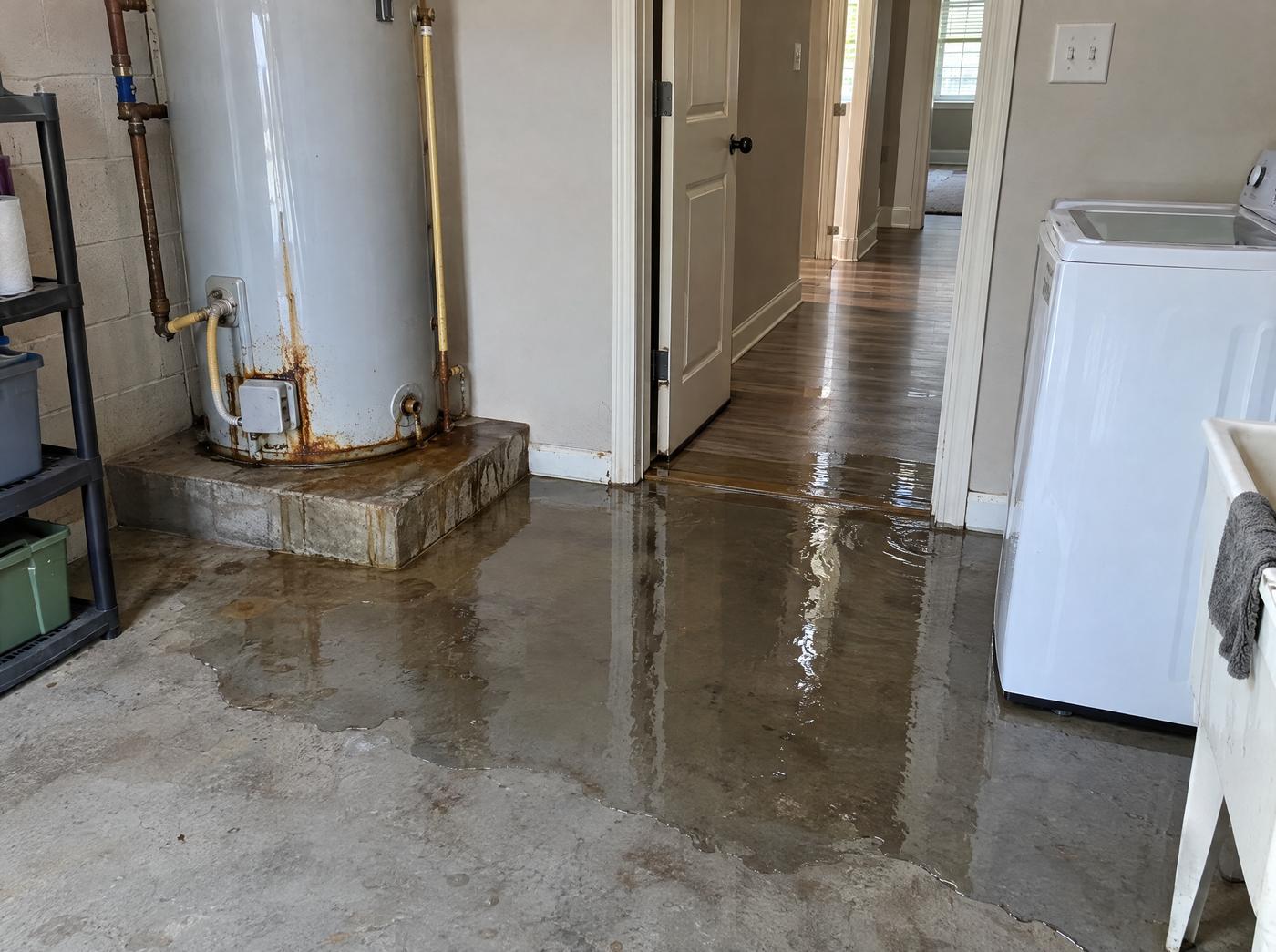
Water heater and appliance leak cleanup in Marietta, GA
Appliance leaks tend to start behind or under something. A washer hose can split while you're at work, a dishwasher can seep under cabinets for weeks, and a water heater tank can let go all at once. By the time anyone sees water, it has often moved under the flooring and into the bottom of the walls.
Partner companies work with the major homeowners insurers in Georgia, including:
State Farm
Allstate
USAA
Travelers
Auto-Owners
Farmers
American Family
Liberty Mutual
Georgia Farm Bureau
Progressive
Insurers are named for reference only. We are not affiliated with or endorsed by any insurance company.
What to do in the next few minutes
Cabinets and floors are where the cost adds up. Particleboard cabinet bases swell fast, and water trapped under laminate or vinyl plank can't dry on its own. Quick extraction and drying is often the difference between drying those materials and replacing them.
Water category:Category 1 from supply lines; Category 2 from washer or dishwasher drain water
1Shut off the water to the appliance. For a water heater, close the cold-water valve on top and turn off the gas or the breaker.
2Let a water heater cool before you touch the drain valve or pipes. The water can scald.
3Unplug the washer, dishwasher, or refrigerator if you can reach the plug safely.
4Empty the cabinets near the leak and take photos.
5Write down the appliance's make, model, and age. Your insurer may ask.
How a restoration company handles water heater & appliance leaks in Marietta
Step 1
Find the edges
Moisture meters and a thermal camera show how far the water spread under floors and cabinets and into the next room.
Step 2
Extract
Water is pulled from carpet, pad, and from under floating floors so it stops wicking into the walls.
Step 3
Dry the cabinets and floors
Toe kicks may come off to dry under cabinets, and floor-drying mats can pull water out of hardwood.
Step 4
Dehumidify
Dehumidifiers and air movers run until wood, drywall, and subfloor read dry.
Step 5
Claim records
Photos, readings, and an itemized estimate are prepared for your adjuster.
Local notes
What Marietta homeowners should know
If your water heater sits in a garage, a closet, or the crawl space, a slow leak can go unnoticed for weeks. Check the base and the drain pan when you change the HVAC filter. If it's leaking, close the cold-water valve on top and shut off the gas or the breaker before you call.
Insurance
Will insurance cover it?
A sudden appliance leak is generally covered as sudden and accidental discharge, minus your deductible. The failed appliance itself usually isn't. Slow leaks that went on for weeks are often excluded, which is one more reason to get the damage documented right away.
My water heater leaked. Is the damage covered by insurance?
If it failed suddenly, the water damage usually is, minus your deductible. The water heater itself usually isn't. A slow drip that rotted the floor over months is often excluded, so report it and get photos as soon as you find it.
Can laminate or vinyl plank floors be dried?
Sometimes. Floating floors trap water underneath, so they often have to be lifted to dry the subfloor. Boards that have swollen at the edges usually can't be saved. Hardwood nailed to the subfloor has a better chance if drying starts quickly.
What signs mean a water heater is about to fail?
Rust at the base, water in the drain pan, a damp spot on the floor, or rumbling and popping sounds are all signs to call a plumber. Replacing a tank before it fails costs far less than drying the rooms around it.