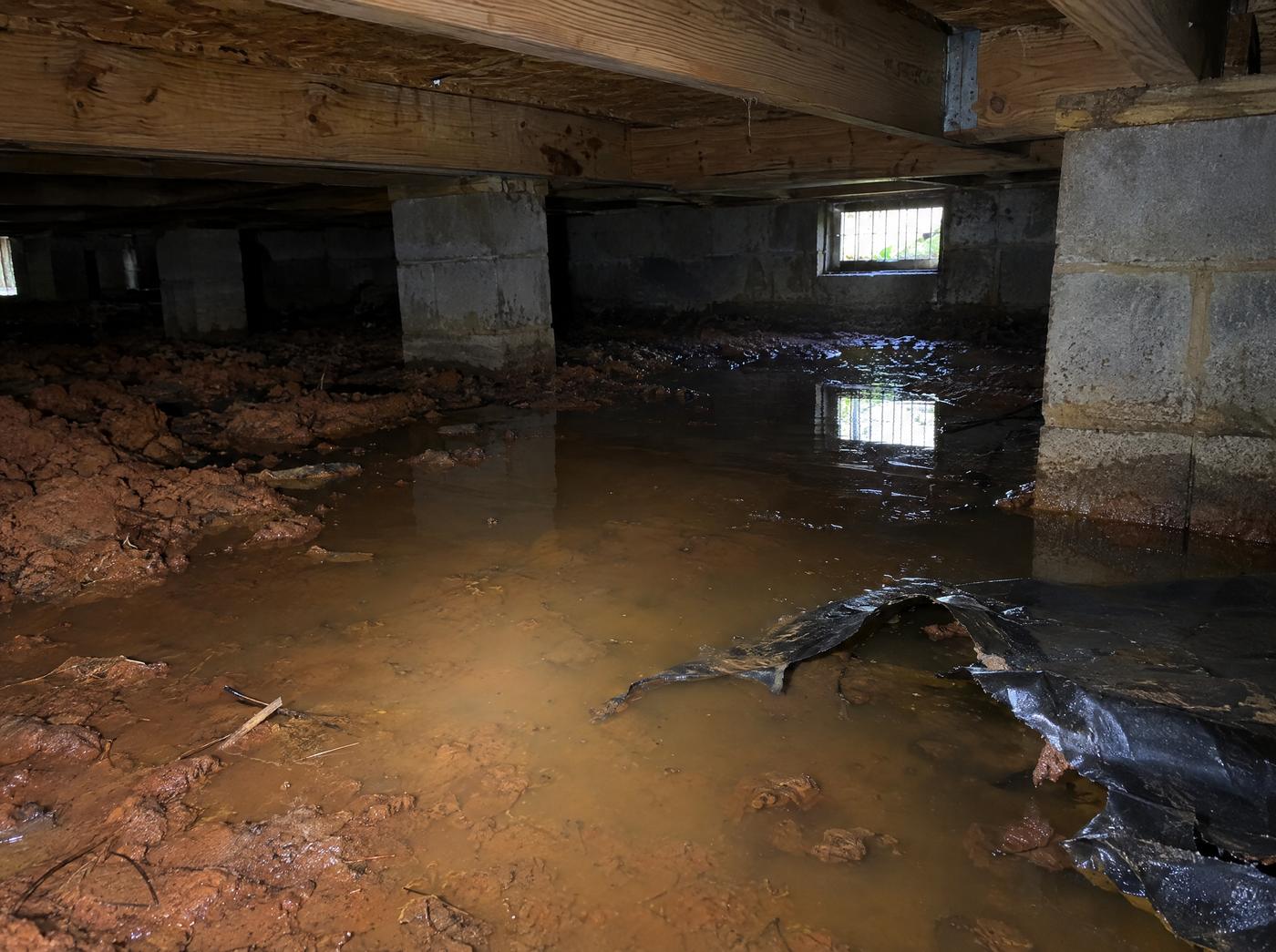
Crawl space and basement water removal in Marietta, GA
Homes in Marietta sit on crawl spaces, slabs, or basements, and water collects on the bottom level. It gets in from heavy rain running toward the foundation, a gutter dumping next to the wall, a failed sump pump, or a plumbing leak nobody can see. Because it's out of sight, it often sits for days.
Partner companies work with the major homeowners insurers in Georgia, including:
State Farm
Allstate
USAA
Travelers
Auto-Owners
Farmers
American Family
Liberty Mutual
Georgia Farm Bureau
Progressive
Insurers are named for reference only. We are not affiliated with or endorsed by any insurance company.
What to do in the next few minutes
Georgia summers make that worse. Damp soil and humid air keep a crawl space wet long after the puddle is gone, and wet joists, subfloor, and insulation are where mold starts. UGA Extension advises keeping indoor humidity below 60 percent and covering crawl space soil with a vapor barrier.
Water category:Usually Category 2; Category 3 if it came from outside or a sewer line
1Don't crawl into standing water if wiring, a furnace, or a water heater could be wet. Cut power to that area from a dry spot or wait for help.
2If you have a sump pump, check that it's plugged in and the breaker hasn't tripped.
3Look at your gutters and downspouts. Water pouring next to the foundation is a common way in.
4Take photos of the water depth before anything is pumped out.
5Note where the water seems to come from: a pipe, the walls, a vent, or the ground. Your insurer will ask.
How a restoration company handles crawl space & basement water in Marietta
Step 1
Pump-out
Standing water is pumped out of the crawl space or basement, and wet debris is cleared so the area can be inspected.
Step 2
Check the structure
Joists, subfloor, sill plates, and insulation are checked with moisture meters. Soaked insulation and a torn vapor barrier usually come out.
Step 3
Clean and treat
Surface water and groundwater carry bacteria, so the area is cleaned and treated before drying.
Step 4
Dry the space
Dehumidifiers and air movers run until the wood reads dry. Crawl spaces and basements usually need more dehumidification than rooms upstairs.
Step 5
Find the cause
The crew notes where the water came in and documents it for your claim, so you know whether you need a plumber, gutter work, or drainage.
Local notes
What Marietta homeowners should know
Crawl spaces under Marietta homes deal with humid summers on top of any leak. UGA Extension recommends a 6 to 8 mil vapor barrier over crawl space soil and keeping indoor humidity below 60 percent. If yours is torn or missing, ask the restoration company to note it in the report so you can fix it after the drying.
Insurance
Will insurance cover it?
Coverage depends on the source. A burst pipe or appliance leak under the house is usually covered. A failed sump pump or a drain backup usually needs a water backup endorsement. Rain or groundwater coming in from outside is generally excluded and only a flood policy covers it.
Why does my Marietta crawl space have water after heavy rain?
Usually because water is running toward the house instead of away from it. Gutters that overflow or empty next to the wall, soil that slopes toward the foundation, and low vents can all let rain into a crawl space, and it can keep seeping in for a while after the storm ends.
Can I just leave a wet crawl space to dry on its own?
It's risky. In a humid Georgia summer, a crawl space can stay damp for weeks, and wood that stays wet that long can grow mold. A dehumidifier and moisture readings are how you know it's actually dry.
Is water in my crawl space covered by insurance?
It depends where it came from. A plumbing leak usually is. A sump pump failure or drain backup usually needs a water backup endorsement. Rain or groundwater from outside generally isn't covered without flood insurance.